Microcontrollers vs Microprocessors: Key Differences and Applications
In the rapidly evolving field of embedded systems, understanding the distinctions between microcontrollers and microprocessors is crucial for businesses, developers, and engineers seeking efficient and scalable solutions. Both components serve as the brains of modern electronic devices, but their differences make each uniquely suited to specific applications. This article will explore these differences in depth, their respective advantages, practical use cases, and how you can choose the best option for your next project.
What Are Microcontrollers and Microprocessors?
Microcontrollers (MCUs)
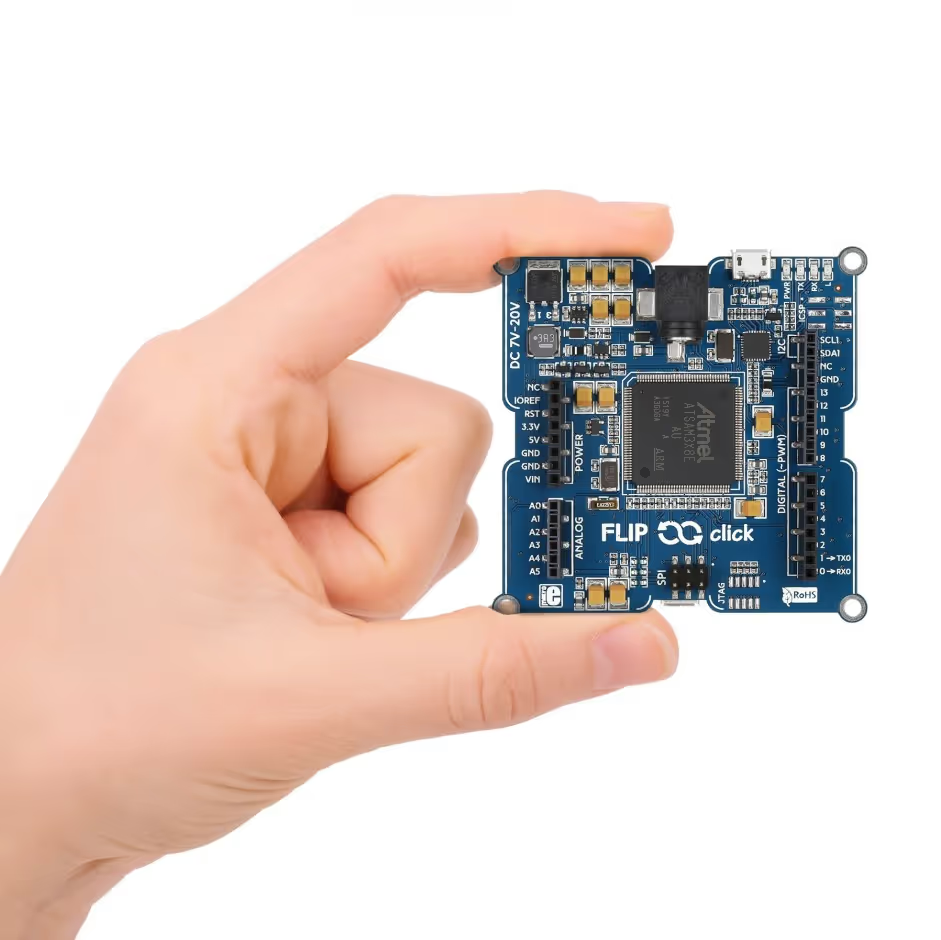
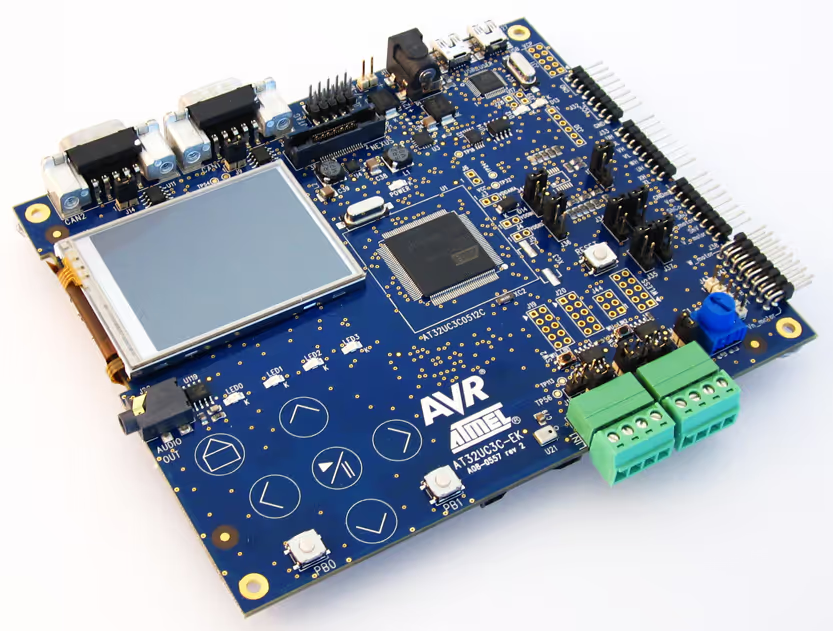
A microcontroller is an integrated circuit designed to perform specific tasks. It combines a processor, memory, and peripherals (such as timers, input/output ports, and communication interfaces) on a single chip. Microcontrollers are commonly used in embedded systems where tasks are well-defined and resource constraints are tight.
Microcontrollers operate in real-time environments, handling tasks with predictable timing and high reliability. Due to their low power consumption and integrated design, they are perfect for applications with strict cost and size constraints.
Microprocessors (MPUs)
A microprocessor, on the other hand, is a more powerful and versatile chip focused solely on processing. Unlike microcontrollers, microprocessors lack built-in peripherals and memory. They are typically used in systems requiring complex computations and extensive multitasking capabilities, such as personal computers, advanced industrial machines, and high-performance devices.
Microprocessors excel in applications where computing power and flexibility are key. They are capable of running operating systems, executing complex algorithms, and managing large datasets, making them indispensable in high-end applications.
Key Differences Between Microcontrollers and Microprocessors
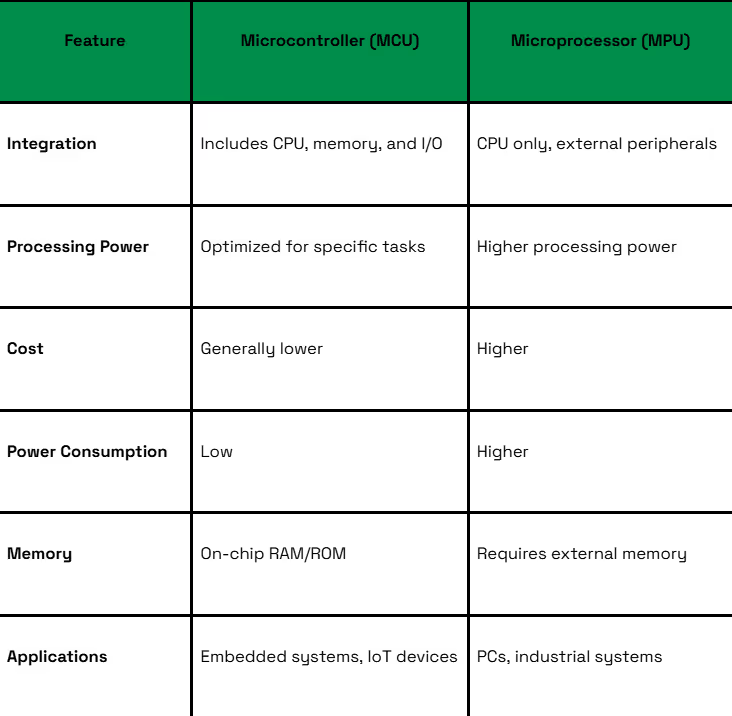
Understanding the differences between these two components can help you make an informed decision for your embedded systems project. Below is a detailed comparison:
Microcontrollers are self-contained systems, integrating the CPU, memory, and peripherals into a single package. This simplifies design, reduces costs, and minimizes power requirements. Microprocessors, however, require external components like RAM, storage, and peripheral interfaces, which add to the design complexity and cost.
Processing Power
Microprocessors are built for speed and performance, with high clock speeds and the ability to handle demanding applications. Microcontrollers are more efficient for repetitive and simpler tasks where real-time processing and deterministic performance are essential.
Power Consumption
Microcontrollers are designed with power efficiency in mind, making them ideal for battery-powered devices. Microprocessors consume significantly more power, reflecting their greater processing capabilities and external component requirements.
Use Cases for Microcontrollers
Microcontrollers shine in scenarios where simplicity, low power consumption, and cost efficiency are priorities. Here are some examples:
Home Automation Microcontrollers power devices like smart thermostats, light switches, and home security systems. Their real-time capabilities ensure seamless operation and responsiveness.
IoT Devices From fitness trackers to environmental sensors, microcontrollers are at the heart of Internet of Things (IoT) devices. They enable low-power wireless communication and efficient data processing.
Automotive Applications Modern vehicles rely on microcontrollers for functions such as engine control, airbag deployment, and infotainment systems. Their reliability and compact size make them indispensable in the automotive industry.
Consumer Electronics Everyday devices like microwaves, washing machines, and toys leverage microcontrollers to perform specific, repetitive tasks reliably.
Medical Devices Simple yet critical devices like glucose monitors, heart rate trackers, and portable diagnostic tools often use microcontrollers for their reliability and efficiency.
Industrial Equipment In industrial settings, microcontrollers manage automation processes, monitor sensors, and control actuators, ensuring seamless and efficient operation.
Use Cases for Microprocessors
Microprocessors are ideal for demanding tasks requiring significant computational power and flexibility. Common applications include:
Personal Computing Laptops, desktops, and servers are powered by microprocessors. These devices demand high-speed computation, multitasking, and large storage capabilities.
Industrial Automation In factories and industrial settings, microprocessors run robotics, CNC machines, and SCADA systems. Their processing power enables real-time decision-making and complex system control.
Telecommunications Devices like routers, switches, and base stations rely on microprocessors for high-speed data processing and network management.
Medical and Imaging Applications Microprocessors power advanced medical equipment, such as MRI machines and high-resolution imaging systems. They handle vast amounts of data and execute complex algorithms efficiently.
Gaming Consoles High-performance gaming systems rely on microprocessors to render graphics, manage multiple inputs, and deliver seamless user experiences.
Artificial Intelligence Applications like natural language processing, machine learning, and neural networks often require the processing capabilities of advanced microprocessors.
Aerospace and Defense Sophisticated defense systems, satellite technology, and aerospace applications often utilize microprocessors to perform high-level computations and manage complex operations.
Factors to Consider When Choosing Between Microcontrollers and Microprocessors
Selecting the right technology for your project involves evaluating multiple factors:
Application Requirements Determine whether the application needs dedicated functionality (better suited for microcontrollers) or versatile computing capabilities (ideal for microprocessors).
Cost Constraints Microcontrollers are cost-effective, making them an excellent choice for low-budget projects or high-volume production.
Power Availability For battery-operated devices, microcontrollers’ low power consumption is a significant advantage. Microprocessors, on the other hand, require consistent power sources.
Performance Needs Projects demanding high-speed computation, multitasking, or advanced processing benefit from microprocessors.
Scalability For applications requiring system expansion or integration with external hardware, microprocessors provide greater flexibility.
Development Time Microcontrollers, with their integrated components, often allow for faster development and prototyping compared to the more complex setups required by microprocessors.
Environmental Considerations Consider the operating conditions of the device. Microcontrollers often handle extreme environments better due to their compact and durable design.
The Horizonless Embedded Solutions Advantage
At Horizonless Embedded Solutions, we understand the complexities involved in embedded systems design. Our team of experts specializes in:
Embedded Electrical Design: Crafting efficient hardware tailored to your requirements.
Software Development: Developing firmware and application software optimized for performance.
System Integration: Ensuring seamless operation between hardware and software components.
Custom Solutions: Addressing your unique challenges with innovative and scalable designs.
We help businesses navigate the decision-making process by providing detailed analysis and recommendations, ensuring that every project achieves its goals efficiently and effectively. With a customer-centric approach, we aim to deliver solutions that align with your business objectives, helping you stay competitive in a technology-driven world.
Practical Examples
To further illustrate the application of microcontrollers and microprocessors, consider the following scenarios:
Example 1: Smart Home Hub
A smart home hub requires connectivity, low power consumption, and the ability to manage multiple IoT devices. A microcontroller is the optimal choice, as it integrates all necessary components and operates efficiently within the constraints.
Example 2: Industrial Robot
An industrial robot performing complex tasks like welding or assembly requires high computational power, precision, and multitasking capabilities. A microprocessor-based system provides the necessary processing power and scalability.
Example 3: Wearable Fitness Tracker
A fitness tracker needs to process sensor data, communicate wirelessly, and operate on a small battery. Microcontrollers’ low power consumption and integrated design make them ideal for this application.
Example 4: Autonomous Vehicles
Autonomous vehicles rely on a combination of microcontrollers and microprocessors. While microcontrollers handle specific real-time functions like sensor data acquisition and basic control tasks, microprocessors manage high-level decision-making and AI algorithms.
Example 5: Smart Agriculture
Smart agriculture systems, such as automated irrigation controllers and crop monitoring drones, benefit from the low power and integration of microcontrollers for basic tasks. Simultaneously, microprocessors are used for analyzing large datasets and optimizing resource allocation.
Example 6: Advanced Healthcare Devices
Devices like portable ventilators and telemedicine systems combine microcontrollers for real-time operations and microprocessors for data analysis and communication.
Future Trends in Microcontrollers and Microprocessors
The embedded systems landscape continues to evolve, and both microcontrollers and microprocessors are advancing to meet emerging challenges and opportunities. Here are some trends to watch:
Edge Computing As edge devices become more prevalent, microcontrollers are increasingly incorporating features like AI and machine learning capabilities to process data locally, reducing latency and bandwidth usage.
Energy Efficiency With sustainability in focus, microprocessors are being designed with advanced power-saving technologies to reduce energy consumption without compromising performance.
Integration with IoT Both microcontrollers and microprocessors are playing critical roles in expanding IoT ecosystems. Enhanced connectivity and security features are being added to support robust IoT applications.
Advancements in Process Technology Smaller semiconductor nodes are enabling greater performance and efficiency in both microcontrollers and microprocessors, opening doors to more compact and powerful designs.
AI-Enabled Embedded Systems The convergence of AI with embedded systems is pushing the boundaries of what microcontrollers and microprocessors can achieve, enabling smarter and more autonomous devices.
Final Thoughts
Understanding the fundamental differences between microcontrollers and microprocessors is essential for anyone working with embedded systems. By aligning the capabilities of these technologies with your project’s requirements, you can optimize performance, reduce costs, and achieve your business objectives.
At Horizonless Embedded Solutions, we bring expertise and innovation to every project. Whether you’re navigating the complexities of IoT design, building advanced industrial systems, or crafting a consumer device, our team is ready to assist. Let us help you turn your vision into reality by delivering tailored embedded solutions designed to meet your specific needs. Together, we can drive the future of technology forward.
Blog
Insights from Our Experts
Explore our featured articles on embedded solutions.