How to Choose the Right Microcontroller for Your Project
In the world of embedded systems, choosing the right microcontroller (MCU) is one of the most critical decisions you'll make for your project. Whether you're designing a simple device or a complex system, selecting an MCU that aligns with your performance, power, and cost requirements is essential for success. This guide will help business executives, developers, and engineers navigate the MCU selection process, ensuring that you pick the best fit for your project.
Understanding the Basics of Microcontrollers
Before diving into the specifics of how to choose a microcontroller, it’s important to understand what an MCU is and how it fits into your embedded system.
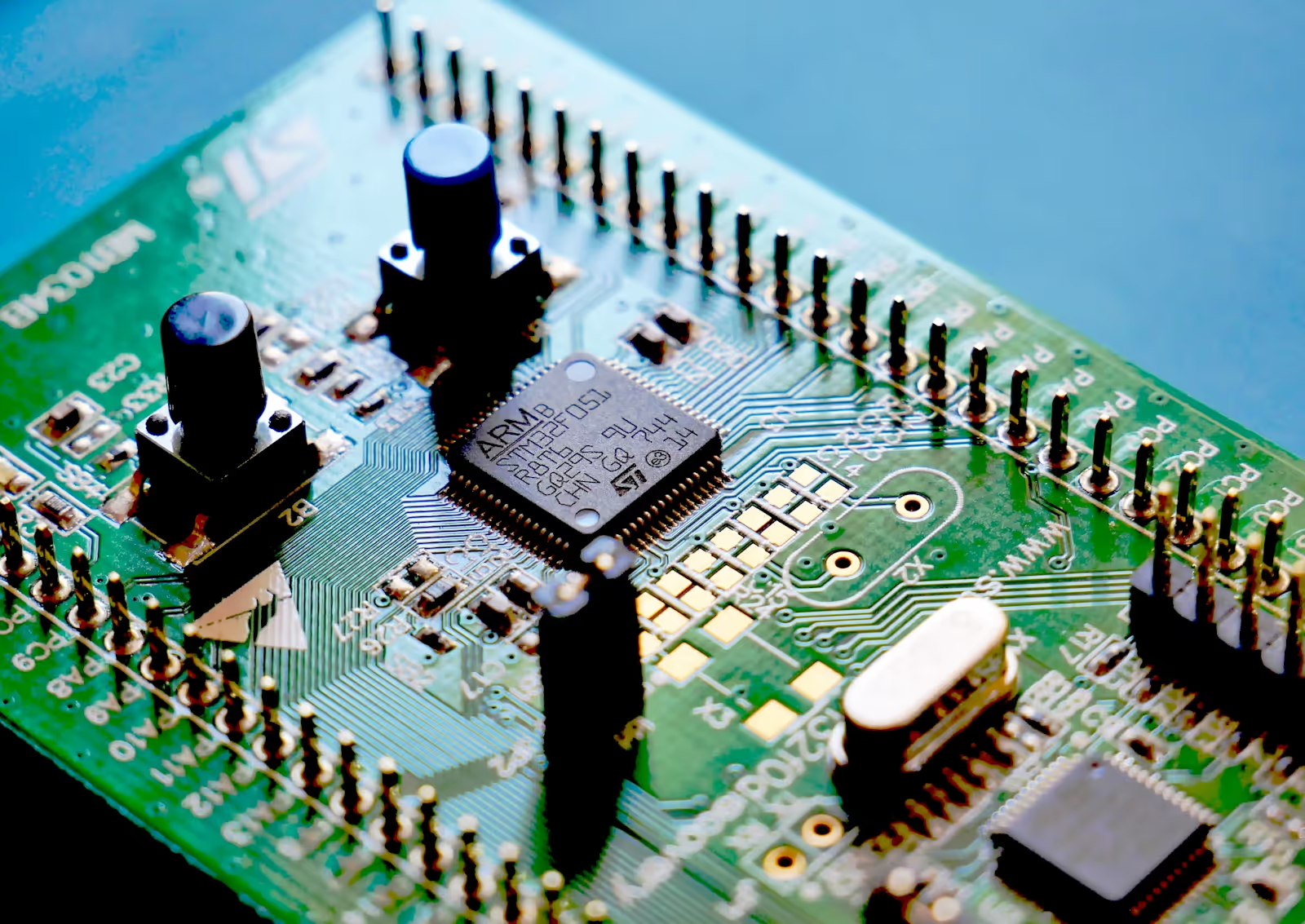
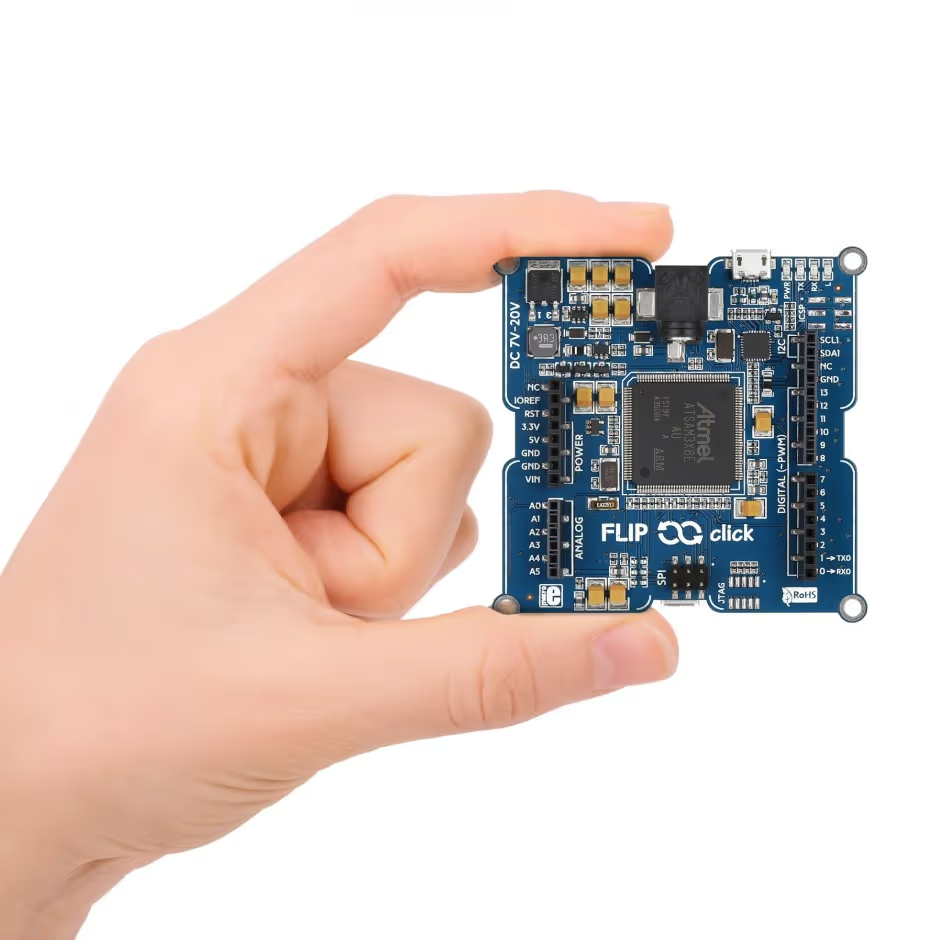
A microcontroller is essentially a compact computer that serves as the "brain" of an embedded system. It integrates the processor, memory, and input/output (I/O) interfaces in a single chip, making it ideal for controlling electronic devices.
Key Components of an MCU:
CPU (Central Processing Unit): The heart of the MCU, responsible for executing instructions.
Memory: RAM (volatile) and ROM (non-volatile) provide space for data and program storage.
I/O Ports: These enable communication between the MCU and other devices, such as sensors or actuators.
Peripherals: Additional features like ADCs (Analog-to-Digital Converters), timers, and communication interfaces (I2C, UART, SPI) are often built into the MCU.
Common MCU Architectures:
ARM Cortex: Highly popular for its scalability and efficiency. Examples: STM32 series, NXP LPC series.
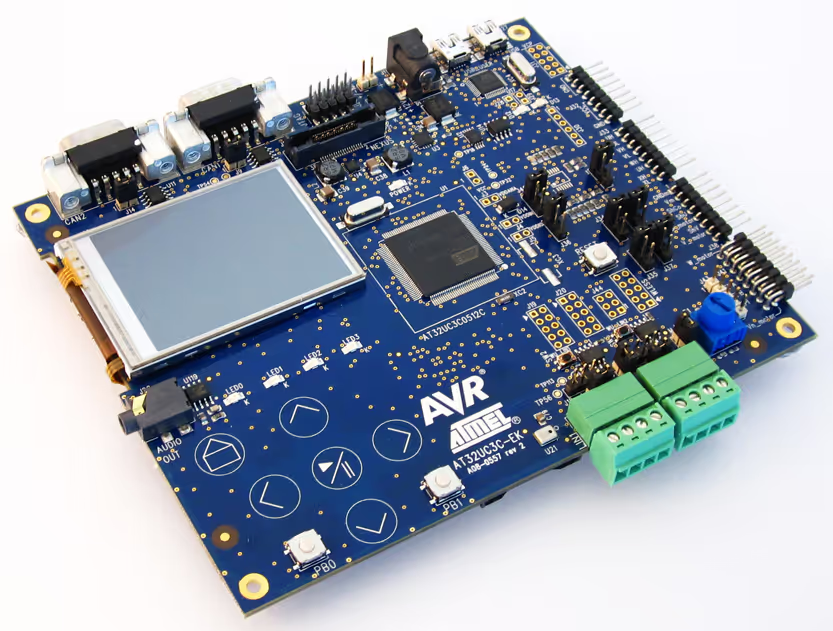
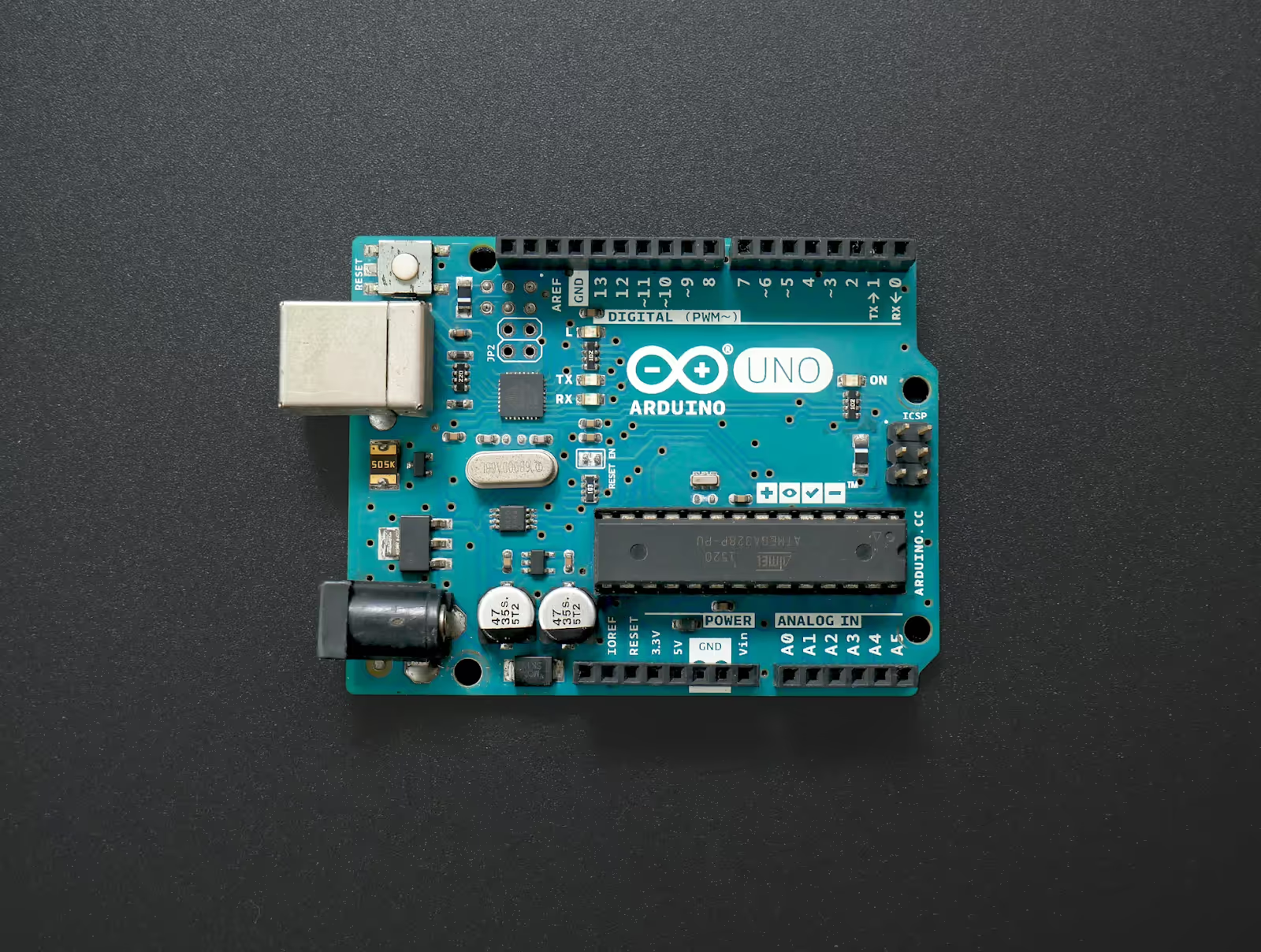
AVR: Known for simplicity and low power usage. Examples: ATmega328 (used in Arduino boards).
PIC: A family from Microchip, suitable for both low-cost and high-performance applications. Example: PIC16F877.
Key Factors to Consider When Choosing a Microcontroller
Selecting the right MCU involves balancing several factors to meet your project’s technical requirements. Here’s a breakdown of the key considerations:
1. Performance Requirements
The performance of the MCU will largely depend on the complexity of your application. If you’re developing a simple sensor interface, a low-performance MCU might suffice. However, if you're designing a system that requires real-time processing or complex data handling, a more powerful MCU is necessary.
Clock Speed: Measures the MCU's processing speed. MCUs typically range from 8 MHz to 500 MHz, depending on their intended use.
Cores: Single-core MCUs are sufficient for many applications, but multi-core MCUs are ideal for parallel processing tasks (e.g., robotics or machine learning).
Example:
STM32F4 (ARM Cortex-M4) offers higher processing power for demanding applications.
ATmega328P (AVR) is commonly used in low-performance applications like home automation.
2. Memory and Storage Needs
Every embedded system has different memory requirements, depending on the complexity of the software and the amount of data processed.
RAM: The amount of volatile memory needed for temporary data storage.
Flash Memory: Non-volatile memory used for storing the program code.
EEPROM: Used for storing data that needs to persist even after power-off.
Example:
STM32F103: Offers 64KB to 128KB of flash memory and 20KB of RAM, making it suitable for mid-range applications.
PIC16F877A: Offers 368 bytes of RAM and 14KB of flash memory, making it ideal for basic applications.
3. Power Consumption
For battery-operated or energy-sensitive devices, low power consumption is a critical consideration. MCUs typically offer various power-saving modes such as sleep, idle, and low-power states.
Power Consumption: Evaluate the current consumption (in µA or mA) under different modes.
Low-Power Features: Many MCUs offer sleep modes where power consumption can drop to microampere levels.
Example:
Microchip PIC32 series: Known for low-power features, suitable for battery-powered applications.
STM32L series: Specifically designed for ultra-low-power applications like wearable devices.
4. Input/Output (I/O) Needs
The number and type of I/O interfaces required by your system will significantly impact your choice of MCU. Consider the types of communication (digital, analog) and peripherals needed.
Digital I/O: Used for on/off signals.
Analog I/O: Required for sensors that provide continuous signals (e.g., temperature sensors).
Communication Interfaces: UART, SPI, I2C are common communication protocols used by MCUs.
Example:
NXP LPC1768: Provides 70 I/O pins and supports multiple communication protocols like I2C, SPI, and UART.
Atmel ATmega328P: Used in Arduino, provides 23 I/O pins and multiple digital/analog input capabilities.
Specialized Considerations for Advanced Projects
In some cases, the selection process requires advanced considerations based on the specific needs of your project.
1. Real-Time Requirements
If your application demands real-time processing (e.g., in control systems), look for MCUs with real-time operating system (RTOS) support or those designed for real-time applications.
Example: STMicroelectronics STM32F7 has support for RTOS and offers high performance for time-critical applications.
2. Security and Reliability
For IoT or mission-critical applications, the MCU’s security features and reliability must be top-notch. Look for MCUs that offer secure boot, encryption, and error correction.
Example: NXP i.MX RT series offers advanced security features like cryptographic accelerators and secure boot.
3. Scalability and Upgradability
Your project’s needs may change over time. Choosing an MCU that allows for easy upgrades or scaling is essential for long-term success. Look for MCUs from well-established families like STM32, which offer a wide range of options within the same series.
Software and Toolchain Compatibility
Choosing an MCU that supports an easy-to-use and robust software development environment is crucial for development speed and efficiency.
IDEs: Ensure the MCU is compatible with popular IDEs like MPLAB (Microchip), Keil, or Arduino IDE.
Libraries and Software Support: Choose an MCU with well-documented libraries and middleware that can accelerate development.
Debugging and Testing: Ensure the MCU supports debugging tools such as JTAG or SWD for efficient testing.
Budgeting and Cost Efficiency
Cost is a crucial factor when selecting an MCU. While some high-end MCUs offer powerful features, they can be costly, especially for projects that require large quantities.
Unit Cost: Prices can vary significantly between families and manufacturers.
Development Costs: Consider the cost of development tools, programming hardware, and software licenses.
Example:
Low-Cost MCU: The Atmega328P (used in Arduino Uno) is affordable and widely used in prototyping.
Higher-Cost MCU: STM32F7 series offers more advanced features at a higher price point.
Case Study: A Practical Example
Let’s look at a real-world example to illustrate how choosing the right MCU can make or break a project.
Project Overview: A wearable health monitoring device required continuous heart rate monitoring, low power consumption, and wireless communication.
MCU Chosen: STM32L4 series, known for its ultra-low power consumption, built-in Bluetooth support, and sufficient processing power.
Challenges and Solutions: The project faced challenges in minimizing power consumption while maintaining accurate data collection. The STM32L4’s low-power sleep modes and real-time capabilities solved this issue, ensuring long battery life and timely data processing.
Outcome: The project was successful, with the MCU’s power efficiency extending battery life for weeks, making it an ideal solution for wearable applications.
Conclusion
Choosing the right microcontroller is critical to the success of any embedded system project. By carefully evaluating your system’s performance, memory, power, I/O, and other requirements, you can make an informed decision that minimizes cost and development time while maximizing the reliability and functionality of your product.
At Horizonless Embedded Solutions, we specialize in helping businesses select and integrate the right microcontroller for their projects. If you're ready to take your embedded system to the next level, contact us today for expert consultation and support.
Blog
Insights from Our Experts
Explore our featured articles on embedded solutions.